 Back to blog
Complete or Partial Dentures: Which Is Right?
By Maharjan's Local Dentures6 min read
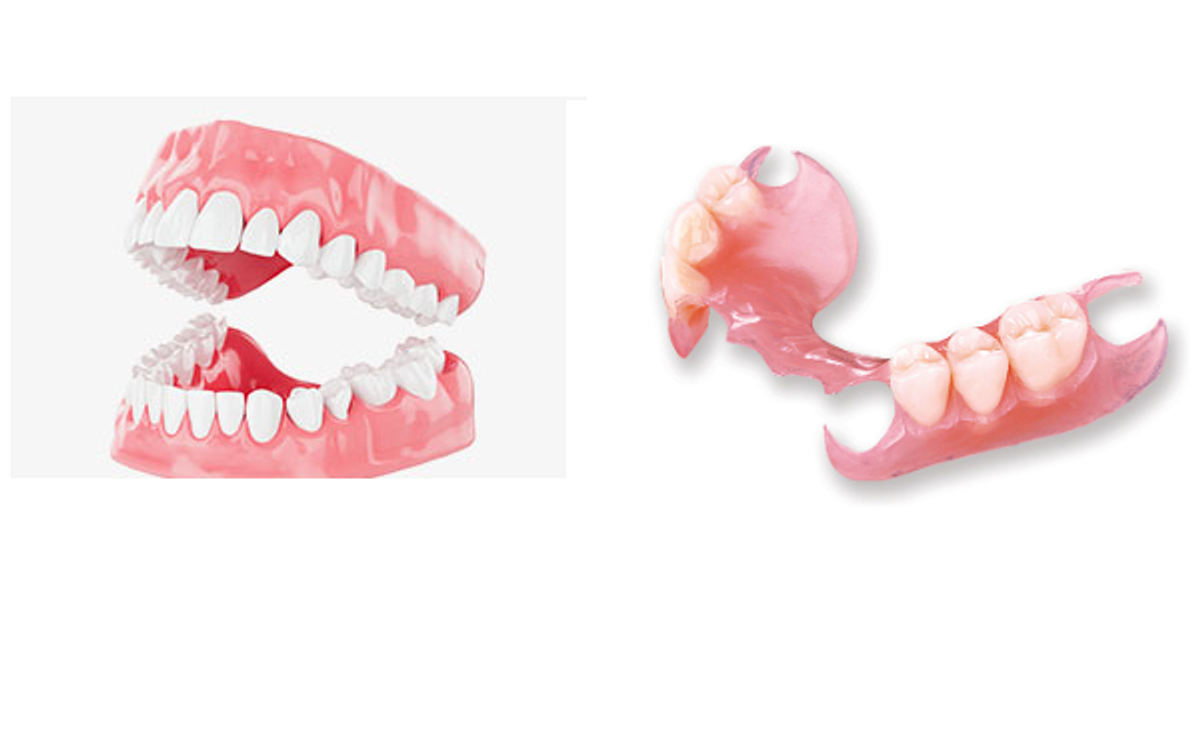
Choosing between complete and partial dentures depends on your remaining teeth, with various materials available to restore function and appearance. Proper fit, regular cleaning, and professional dental guidance ensure long-term comfort and oral health.
The loss of teeth can be an issue not only for the appearance of a smile but also for the process of eating, speaking, and one’s self-esteem in many situations. Dentures provide an opportunity to counter this loss of teeth and restore comfort, functionality, and the look of a smile.
One of the first decisions a person must make when getting dentures is whether to opt for complete or partial dentures. Although both provide tooth replacement, each serves different needs. Knowing the difference will help you have a useful discussion with your dentist.
What Are Complete Dentures?
Complete dentures, sometimes referred to as full dentures, are intended to replace all the teeth on either the upper or lower arch. They may be appropriate for individuals who have completely lost teeth in one arch or those who are no longer able to keep their remaining teeth.
Complete dentures are made to match the shape of a person's mouth. They can help in restoring various vital functions in our daily lives, which include:
- Facilitating chewing
- Enabling clearer speech
- Restoring the original look of a person's smile
- Being an aid for the lips and cheeks
- Providing one with self-confidence while smiling
Since the mouth shapes and structures of various individuals differ, complete dentures must be fitted according to the individual's requirements.
What Is a Partial Denture?
Partial dentures refer to those devices meant for individuals whose natural teeth still exist but who are missing one or more teeth. Instead of inserting the whole arch, a partial denture is used to fill in the gap of missing teeth.
The function of a partial denture is to give a patient back his or her smile as well as improve chewing and speaking abilities. It can also be adapted to fit with existing teeth, in order to assist those with natural teeth.
Several kinds of materials are available for partial dentures. For instance, acrylic might provide a very affordable option that a patient can use by himself; however, chrome won’t be that cheap, yet it will come with maximum durability and thin profile. Flexible partial dentures might also provide a light and metal-free alternative.
The choice of most appropriate material will depend on factors such as the number of missing teeth, their location, condition of remaining teeth and comfort requirements.
Complete vs Partial Dentures: What's the Difference?
The main difference between complete and partial dentures is the number of natural teeth remaining.
| Feature | Complete Dentures | Partial Dentures |
|---|---|---|
| Designed for | People missing all teeth in an arch | People missing some teeth |
| Natural teeth | Usually none in the treated arch | Some natural teeth remain |
| Coverage | Replaces an entire upper or lower arch | Replaces specific missing teeth |
| Removable | Yes | Yes |
| Main purpose | Replace an entire set of missing teeth | Fill gaps while maintaining remaining teeth |
| Common materials | Acrylic and other denture materials | Acrylic, chrome and flexible materials |
While this comparison provides a general overview, the right choice depends on your individual oral health and circumstances.
Which Type of Denture is Suitable for You?
When it comes to selecting either complete dentures or partial dentures, the main factor is the number of teeth you have left.
Consider complete dentures if:
- You have lost all of the teeth from your upper/lower jaw.
- You have no healthy teeth left for retention.
- You require a solution for a complete upper/lower dental arch restoration.
- You want a removable device after losing many teeth.
Consider partial dentures if:
- You still have some healthy natural teeth left.
- You are missing one or more teeth.
- You want to improve the aesthetics of your smile.
- You want a removable option for tooth replacement.
The best option for you should not be determined based solely on the number of teeth missing. Be sure to also take into account the health of your remaining teeth and gums, as well as your bite comfort preferences.
Alternatives to Dentures
The variety of materials and methods make it possible to manufacture complete and partial dentures according to the patient's needs.
Chrome Dentures
Chrome dentures are made of a cobalt-chrome metal structure, which provides increased strength and durability. Thinner structures allow for their utilization in some partial denture cases.
Flexible Dentures
Flexible dentures are made of flexible materials and are lightweight prostheses that don't contain metal. This type of denture is an excellent option for patients looking for an invisible denture.
Digital Dentures
The development of digital technologies has changed the design process of dentures. Digital dentures have opened new opportunities for designing and manufacturing more precise models that provide better fit and optimal aesthetics.
Implant Retained Dentures
Implant-retained dentures are another option for those who consider conventional dentures. These dentures are installed on dental implants and provide the additional stability of the denture in comparison to removable dentures.
Why is it important that your dentures fit properly?
Any type of denture should fit properly so as not only to be able to use the denture but also to ensure comfort.
If you have dentures that do not fit properly on your mouth, you might find it difficult to keep them from moving while eating or talking. Over time, the condition of your mouth can affect the fit of your dentures.
Professional help may be necessary for those who feel discomfort with their dentures that do not fit properly.
It is very important to take care and clean your dentures properly. If any natural teeth are still there, then proper maintenance becomes even more vital.
Choosing the Right Denture
Not everyone needs the same kind of denture. When making your choice, you need to consider the following:
- How many teeth you are missing
- How well your remaining teeth are doing
- How healthy your gums are
- How comfortable and stable your denture will be
- How your denture will look
- How you live your life and what your daily routine is like
- How much money you are willing to spend on your dentures
Your dentist will be able to evaluate all these factors and determine which dentures are the best fit for you.
Conclusion
Do you wish to use complete or partial dentures?
Complete dentures are used to describe the technique of tooth replacement in whole arch, whether uppers or lowers, while partial dentures refer to situations when some teeth are still in place, and it is necessary to provide teeth replacement for one or several missing teeth.
In the end, the choice is completely up to you, based on what you need and what condition your mouth is in.
By consulting with your dentist, you will make the right decision concerning whether to use complete or partial solutions that would suit you best.
Frequently Asked Questions
1. Are complete dentures intended to replace all teeth in a dental arch?
Yes. Complete dentures are meant to replace all the teeth in any of the arches, that is upper or lower, of the jaw.
2. Do partial dentures replace one or more missing teeth?
Yes. Partial dentures can replace one or most missing teeth, making use of the remaining ones.
3. Are both complete and partial dentures constructed to be removable?
Yes. Complete and partial dentures, like most types, are made removable in order to facilitate the cleaning process.
4. Do dentures help with chewing?
Yes. Dentures can be helpful for chewing activities after tooth loss though they take some practice before one is able to eat with them.
5. Do dentures help with speech?
Yes. Dentures help in better speech and require some getting used to.
6 Do dentures require regular care and cleaning?
Yes. Regular cleaning and proper care can help maintain your dentures and support good oral hygiene.